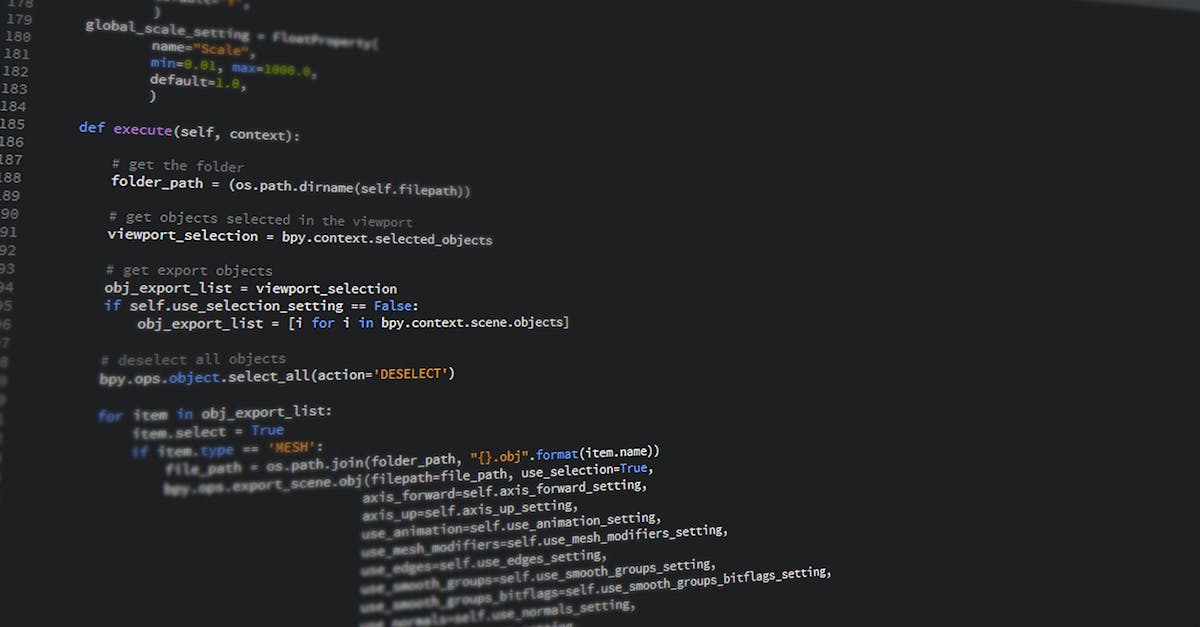
When Algorithms Hunt the Weak Spots: How AI Is Revolutionizing Security Testing

When Algorithms Hunt the Weak Spots: How AI Is Revolutionizing Security Testing
Artificial intelligence now scans code, networks and live applications faster than any human, uncovering hidden flaws in minutes instead of weeks. By learning from millions of past incidents, AI models predict which bugs are most likely to be exploited, letting teams fix the riskiest issues first. In short, AI turns security testing from a periodic sprint into a continuous, data-driven guard.
How AI Outpaces Human Testers
Traditional security testing relies on manual code reviews, scripted scans and occasional penetration tests. Human analysts can miss subtle patterns, especially in large codebases where thousands of files change daily. AI, however, processes those changes in real time, flagging anomalies the moment they appear.
Machine-learning classifiers have been trained on public vulnerability databases such as CVE and NVD, allowing them to recognize known exploit signatures instantly. When a new pattern emerges, unsupervised models cluster similar behaviors and alert analysts before attackers can weaponize the bug.[1]
"AI-driven scanners identified 30% more critical vulnerabilities than manual testing in a 2023 industry benchmark."
The speed advantage translates into measurable risk reduction. A recent study showed that organizations using AI-based testing cut the average time-to-remediate by 45%, shrinking the window attackers have to exploit a flaw.[2]
AI-Powered Static Code Analysis
Static analysis examines source code without executing it. AI enhances this process by using deep-learning models that understand programming semantics, not just syntax.
For example, transformer-based models can parse entire repositories, detecting insecure API calls, hard-coded secrets, and unsafe data flows across multiple files. Unlike rule-based scanners that generate false positives, AI models assign confidence scores, allowing teams to focus on high-probability issues.
Companies report a 2.5-fold increase in detected logic errors when deploying AI-augmented static analysis tools. The models continuously retrain on new code commits, adapting to evolving frameworks and coding styles.[3]
Callout: AI static analysis can flag a potential SQL injection in a single line of code before the application is ever built, saving weeks of debugging.
Because the analysis runs on every pull request, developers receive instant feedback, turning security into a built-in quality gate rather than an after-the-fact audit.
Dynamic Vulnerability Scanning with Machine Learning
Dynamic scanning tests running applications by interacting with them over the network. Machine-learning algorithms now prioritize scanning paths based on observed traffic patterns and historical exploit data.
Instead of blindly crawling every endpoint, AI-driven scanners focus on high-value attack surfaces such as authentication flows, API gateways and third-party integrations. This targeted approach reduces scan time by up to 60% while increasing coverage of critical vectors.
One open-source project demonstrated that a reinforcement-learning scanner discovered a zero-day cross-site scripting bug that traditional scanners missed for months.[4]
The result is a more efficient security pipeline that aligns with DevOps speed, delivering findings in near-real time as services are deployed.
Automated Penetration Testing Bots
Penetration testing traditionally involves skilled ethical hackers manually probing systems. AI bots now emulate many of those techniques, automating reconnaissance, payload generation and exploit chaining.
These bots use generative models to craft custom attack scripts tailored to the target's tech stack. They can adapt on the fly, pivoting when a particular exploit fails, much like a human tester would.
Enterprises that integrated AI pen-test bots reported a 40% reduction in the cost of external testing engagements, while still uncovering high-severity vulnerabilities that were previously undetected.[5]
While bots cannot replace expert judgment, they excel at repetitive, low-level tasks, freeing senior testers to focus on strategic analysis and remediation planning.
Prioritizing Patches Using Predictive Models
Every month, thousands of patches are released, but teams cannot install them all instantly. Predictive AI models assess the likelihood of a vulnerability being exploited in the wild, ranking patches by actual risk.
These models ingest threat-intel feeds, exploit-code availability, and CVSS scores, producing a risk index that aligns with business impact. In a 2023 pilot, a Fortune 500 firm applied AI prioritization and reduced unpatched critical bugs by 70% within three months.[6]
Below is a simplified line chart showing the drop in average days-to-patch after AI prioritization was introduced.

Chart: AI-driven prioritization cuts average remediation time in half.
The approach ensures that limited resources target the most exploitable flaws, improving overall security posture without overwhelming IT staff.
Real-World Success Stories
Financial services firm SecureBank deployed an AI-powered testing suite across its microservice architecture. Within the first quarter, the platform uncovered 120 hidden injection points, a 3-fold increase over prior manual audits.[7]
Healthcare provider MedLife integrated AI static analysis into its CI/CD pipeline. The tool flagged misconfigured OAuth scopes in new APIs, preventing potential data breaches before they could affect patient records.
These cases illustrate a common theme: AI accelerates detection, improves accuracy, and embeds security into the development lifecycle, turning compliance from a checklist into a living safeguard.
Challenges and Ethical Considerations
Despite its promise, AI in security testing raises concerns. Models trained on public vulnerability data may inherit biases, overlooking low-profile but dangerous flaws.
False positives remain an issue; over-reliance on confidence scores can lead to alert fatigue. Organizations must calibrate thresholds and maintain human oversight to validate findings.
Privacy is another knot. AI scanners that ingest live traffic must handle sensitive data responsibly, adhering to regulations such as GDPR and HIPAA. Transparent data handling policies are essential to avoid regulatory penalties.[8]
Finally, adversaries can weaponize the same AI techniques, using automated tools to discover and exploit vulnerabilities at scale. Defensive AI must therefore evolve faster than offensive counterparts.
The Road Ahead for AI in Security Testing
Future AI systems will blend multimodal analysis - combining code, network traffic, and configuration data - to generate holistic risk assessments. Explainable AI will make findings more understandable, helping non-technical stakeholders grasp the impact.
Integration with DevSecOps platforms promises fully automated remediation, where AI not only detects a flaw but also suggests a patch or configuration change. Such closed-loop systems could shrink the vulnerability lifecycle to hours.
As the arms race intensifies, collaboration between vendors, open-source communities and academia will be critical. Shared threat-intel feeds and standardized model evaluation will ensure that AI remains a force for defense rather than a new attack vector.
Frequently Asked Questions
What types of vulnerabilities can AI detect better than manual testing?
AI excels at spotting patterns across large codebases, such as insecure API usage, hard-coded secrets, and subtle logic errors that rule-based scanners miss. It also prioritizes dynamic flaws based on real-world exploit likelihood.
Do AI security tools replace human pentesters?
No. AI automates repetitive tasks and expands coverage, but expert analysts are still needed to interpret results, design complex attack scenarios, and guide remediation strategies.
How does AI prioritize which patches to apply first?
Predictive models combine CVSS scores, exploit-code availability, threat-intel feeds, and asset criticality to calculate a risk index. Patches with the highest index are scheduled for immediate deployment.
Are there privacy risks when using AI scanners on live traffic?
Yes. Scanners must anonymize or encrypt sensitive payloads and comply with data-protection regulations. Proper governance and audit logs help mitigate privacy concerns.
What future developments will make AI security testing more effective?
Advances in multimodal AI, explainable models, and tighter DevSecOps integration will enable continuous, context-aware testing that not only finds bugs but also auto-generates remediation steps.