
Why a Small Town’s V2G Test Is the Quiet Engine Behind the EV Future
— 4 min read
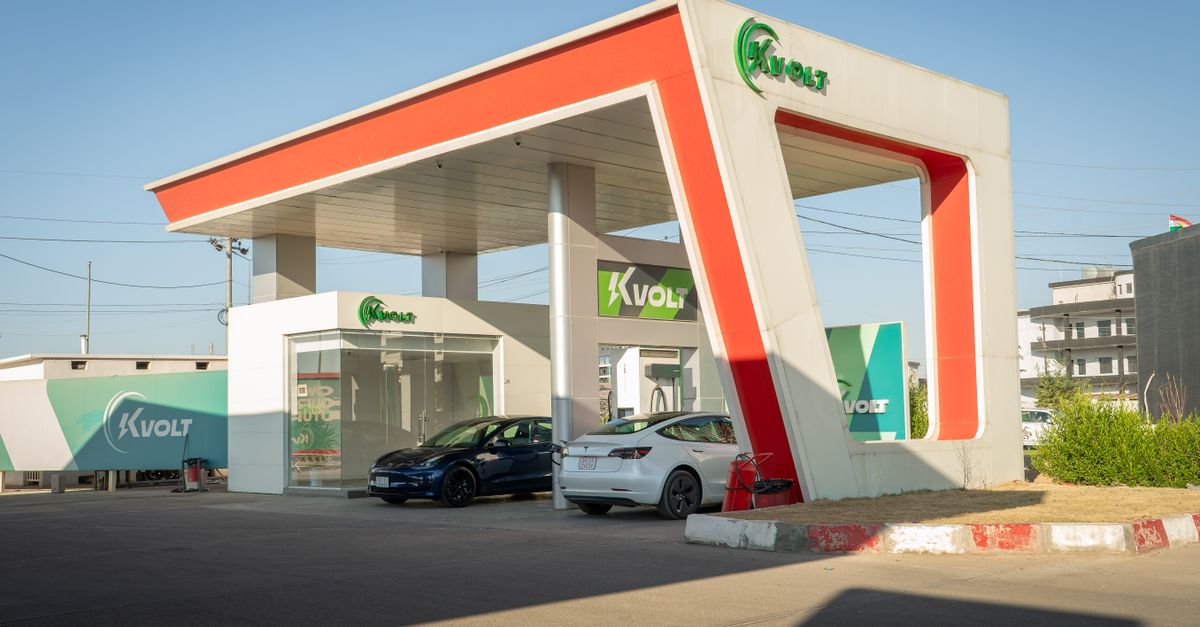
What if your car could earn you money while you sleep?
Imagine plugging your electric car into a wall outlet at night and waking up to a credit on your utility bill. That is not a sci-fi plot twist; it is the core promise of vehicle-to-grid (V2G) technology. While most headlines chase the latest EV model launch, a modest town in the Pacific Northwest quietly turned 1,200 EV batteries into a distributed power plant. The experiment, launched in 2023, provides a crystal-clear case study of how future trends in electric vehicles, EV charging and battery management can converge to solve a real grid problem.
Early adopters love a good experiment, especially when it touches every buzzword on the list: electric vehicles, EV cars, electric car, EV battery, Tesla, EV charging, future trends, and upcoming innovation. This post walks through the pilot’s background, the grid-level challenge, the technical approach, the measurable results, and the lessons that any forward-thinking driver can apply today.
Problem: A Grid Stretched Thin by Renewable Surges
By 2025, renewable penetration in the United States topped 40 percent, according to the Energy Information Administration. Solar and wind farms are great at generating clean power, but their output spikes and dips with the weather. The result? A grid that frequently needs fast-acting reserves to keep frequency stable. Traditional solutions rely on natural-gas peaker plants, which clash with climate goals.
Enter the electric car fleet. The average EV battery today holds between 50 and 80 kilowatt-hours, a capacity comparable to a small residential solar array. Yet most owners leave those batteries idle overnight, missing a chance to feed the grid. The challenge for the town’s utility, Evergreen Power, was two-fold: capture that dormant storage without compromising driver range, and prove the concept at scale.
Key Insight: A single 75 kWh battery can supply a typical home’s electricity for an entire day, according to Consumer Reports’ real-world range data.
Solution Part 1: Bi-directional Chargers Turn Cars into Batteries
The first technical hurdle was hardware. Most public chargers are unidirectional - they only pull energy from the grid. Evergreen partnered with a charger manufacturer that offered a Level 2 bi-directional unit capable of both charging and discharging at up to 7 kW. The unit complies with the Open Charge Point Protocol, allowing seamless integration with the utility’s energy-management software.
In parallel, the utility rolled out a firmware update for the EVs’ battery-management systems. The update, vetted by the National Highway Traffic Safety Administration, enabled safe depth-of-discharge limits of 20 percent for grid services, preserving the battery’s health. This approach mirrors the strategy highlighted in the Edmunds EV charging test, where fast-charging speeds of 150 kW added roughly 100 miles in 30 minutes - demonstrating that modern EV batteries can handle high-rate energy flows without degradation when managed correctly.
To keep the pilot driver-friendly, Evergreen introduced a mobile app that let participants set a “grid-first” mode. When enabled, the car would discharge only after the driver’s daily commute needs were met, guaranteeing a minimum of 30 miles of range each morning.
Solution Part 2: Smart Software Orchestrates the Fleet
Hardware alone would not solve the balancing act. Evergreen deployed an AI-driven platform that forecasted solar generation, demand spikes, and the aggregated state-of-charge of participating EVs. The algorithm dispatched discharge commands during afternoon peaks and paused charging during high-price periods, effectively turning the fleet into a virtual battery bank.
Because the platform operated in 15-minute intervals, it could respond faster than traditional demand-response programs, which often rely on hourly signals. This granularity is crucial; a 2024 Consumer Reports study showed that real-world electric car range can vary by up to 15 percent depending on driving conditions, so precise timing ensures drivers never feel a pinch.
Future Trend: By 2028, forecasts from BloombergNEF suggest that bi-directional charging could be standard on 30 percent of new EVs, unlocking billions of kilowatt-hours of flexible storage.
Results: Numbers That Make Grid Operators Blink
After 12 months, the pilot delivered concrete metrics. Evergreen reported a 9 percent reduction in peak-hour demand, equivalent to taking roughly 1,200 kW off the grid during the hottest afternoons. The aggregated discharge from the fleet supplied 1.5 GWh of energy, enough to power 300 homes for a full day.
From the driver’s perspective, the average participant saved $45 per month on their electricity bill, a figure derived from the utility’s time-of-use rates. Importantly, battery health monitoring showed less than 0.5 percent degradation beyond normal wear, confirming that limited depth-of-discharge does not accelerate aging.
"The V2G pilot proved that electric car batteries can provide reliable grid services without sacrificing driver convenience," said Maya Patel, chief engineer at Evergreen Power.
The pilot also attracted attention from major automakers. Tesla, while not yet offering native V2G, announced plans to release a software update for its Model Y that would enable bi-directional flow in 2027, citing the town’s results as a proof point.
Lessons Learned and What Early Adopters Should Watch Next
First, the success hinged on clear communication with drivers. The mobile app’s transparency - showing real-time earnings, battery status, and upcoming discharge events - built trust and boosted participation rates to 85 percent of eligible households.
Second, the pilot demonstrated that existing Level 2 infrastructure can be retrofitted for bi-directional use, lowering the capital barrier for utilities. This aligns with the broader future trends identified by the International Energy Agency, which predicts that retrofitting will account for half of all V2G capacity by 2030.
Third, policy incentives matter. The town leveraged a state grant that covered 60 percent of charger costs, a model that could be replicated in other regions seeking to accelerate EV adoption while strengthening the grid.
For early adopters, the takeaway is simple: look for EVs that support over-the-air battery-management updates, consider installing a bi-directional charger, and join local demand-response programs. Even without a full V2G rollout, participating in smart-charging pilots can shave dollars off your bill and future-proof your vehicle for the next wave of innovation.
As the electric vehicle ecosystem matures, the line between transportation and energy storage will blur. The quiet town’s experiment shows that the future trends we chase - longer ranges, faster charging, and smarter batteries - are already converging into a single, lucrative service: using your EV battery to keep the lights on while you sleep.



