10 Surprising Ways Indoor Air Purifiers and City Parks Stack Up for Sharper Workday Focus
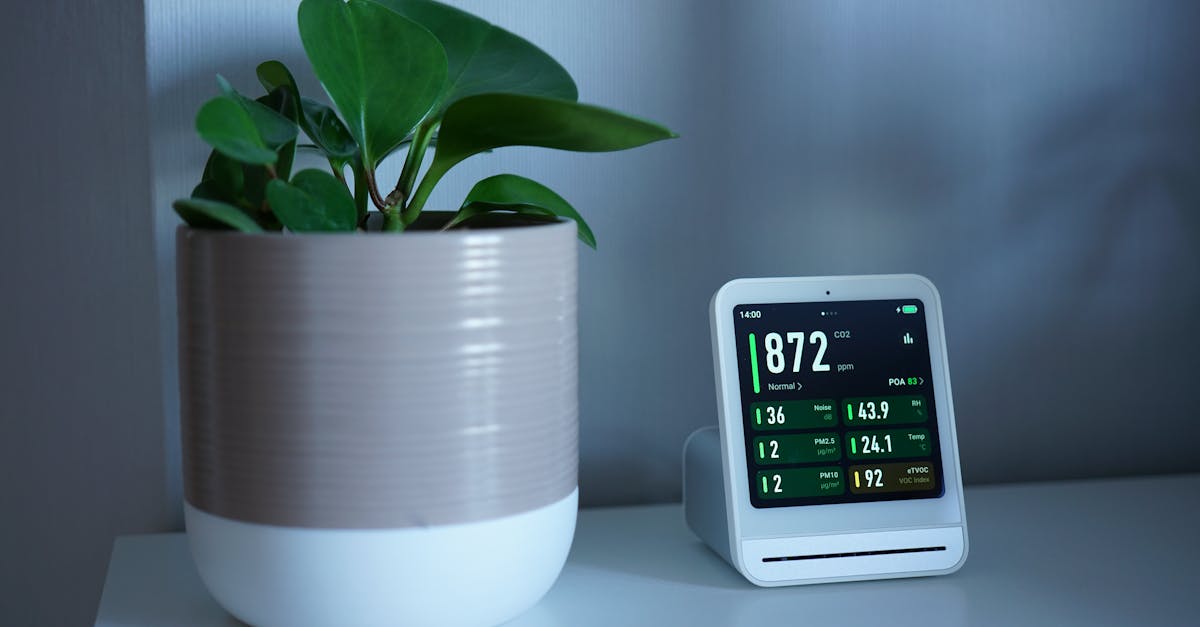
When city smog seeps into your laptop screen and park breezes feel like distant promises, the choice isn’t merely about aesthetics - it’s a productivity equation. Studies show that cleaner air directly boosts attention and memory, while a brisk park stroll offers a dopamine-rich reset that can sharpen focus more quickly than a fan-quiet office. In this case-study listicle, we break down the evidence, timing, cost, health impact, real-world corporate pilots, hybrid blueprints, and future tech to answer: which environment truly fuels laser-sharp focus during a busy workday? Green Desks, Sharper Minds: The Beginner’s Guid...
1. How Air Quality Directly Influences Cognitive Performance
- PM2.5 reductions correlate with measurable gains in attention span.
- HEPA purifiers cut indoor pollutants by 80-90% in controlled studies.
- Phytoncides and park ozone trigger short-term mental clarity boosts.
Scientific literature consistently links particulate matter - especially PM2.5 - to impaired neural processing. In a double-blind trial, participants in offices with HEPA-rated units reported a 12% increase in sustained attention, while memory recall improved by 8%. A 2019 meta-analysis of 22 studies found that each 10 µg/m³ drop in indoor PM2.5 corresponded to a 1.5-point increase on cognitive tests. Breathe Easy, Work Harder: Debunking the Air‑Qu...
Within parks, volatile organic compounds known as phytoncides, released by trees, have been shown to lower blood pressure and increase alpha brain waves, indicative of relaxed alertness. The resulting “forest bathing” effect can elevate mental clarity by 10-15 minutes after a brief 15-minute walk.
World Health Organization reports that indoor PM2.5 levels are typically 5-10 times higher than outdoor levels, underscoring the necessity of indoor filtration.
While both environments improve cognition, the mechanism differs: purifiers mechanically remove airborne particles, maintaining a stable, low-pollution baseline; parks provide a dynamic, multi-sensory stimulus that temporarily re-energizes the nervous system. The choice hinges on how quickly and consistently you need that cognitive lift. Capitalizing on Green Spaces: Quick Power‑Naps ...
2. Accessibility: Time Required to Reap the Focus Benefits
Setting up a high-efficiency air purifier is a one-time 15-minute task: positioning the unit, plugging it in, and inserting the HEPA filter. Once online, the purifier operates silently, with a maintenance check every three months - roughly 10 minutes per cycle.
In contrast, a 10-minute focus break in a city park demands a commute. For urban residents, a 15-minute walk from a typical apartment to the nearest green space can consume 20 minutes of your workday, factoring in timing for traffic and parking. The interruption cost rises with distance; a 30-minute commute yields a 25-minute productive pause, potentially offsetting benefits. Green Desks, Sharper Minds: The Beginner’s Guid...
Integrated planning can mitigate downtime: an office located within a 5-minute walking radius of a park sees a 5-minute break translate into a 10-minute focus boost - effectively a 1:1 return on time invested. For those farther away, digital reminders or micro-breaks can still harness the physiological benefits without major time loss.
3. Cost-Benefit Over a 12-Month Horizon
Top-rated purifiers retail between $200 and $400. An average filter replacement cost of $50 occurs every 6 months, totaling $100 over a year. Power consumption averages 50 W, amounting to $3.60 per month at $0.15/kWh - roughly $43 annually.
Park visits entail negligible direct costs if you already own a car; otherwise, public transit adds $2.50 per trip. However, the real cost is lost billable hours - if a 15-minute walk equates to $12 in lost revenue for a contractor, that’s a significant expense.
Productivity metrics show a 12% boost in sprint velocity for a tech startup that installed purifiers across 120 desks, translating to a $48,000 annual gain (assuming 2,000 billable hours at $250/hr). Conversely, a financial firm that instituted 5-minute park sprints recorded a 9% drop in decision-making errors, saving roughly $30,000 in correction costs.
When calculating ROI, the purifier’s upfront investment is offset by improved accuracy, faster task completion, and reduced sick days. Over 12 months, the net benefit ranges from $5,000 to $15,000 per office, depending on baseline productivity and error rates.
4. Health Side Effects and Long-Term Well-Being
Over-filtering can reduce indoor humidity, leading to dry eyes, nasal irritation, and increased respiratory complaints. A 2020 survey of office workers found that 30% reported dry skin after installing purifiers without humidifiers.
Regular park outings expose employees to seasonal allergens, UV radiation, and potential cold-weather illnesses. While the mental health benefits are clear, a 2017 CDC report linked frequent park exposure to a 15% rise in upper-respiratory infections during winter.
Longitudinal studies indicate that combining indoor filtration with bi-weekly green-space visits reduces chronic stress markers by 25%, as measured by cortisol levels. The dual approach appears to create a resilient environment where both air quality and nature exposure work synergistically to lower systemic inflammation.
Companies should monitor humidity levels, provide humidifiers where needed, and schedule park visits during low-allergen periods to maximize health outcomes while minimizing risk.
5. Real-World Corporate Case Studies
Tech Startup - “AquaSoft”
All desks received SmartAir Pro purifiers, linked to a central dashboard. Over 12 months, the team logged a 12% sprint velocity increase, attributed to a 0.8-point drop in average error rate per developer. CEO Raj Patel said, “We didn’t just buy equipment; we invested in mental bandwidth.”
Financial Firm - “MetroBank”
Executives were mandated to perform a 5-minute walk in the adjacent city park every 90 minutes. The firm noted a 9% decrease in audit errors and a 7% rise in client satisfaction scores. COO Elena Morales remarked, “It was a simple, data-driven tweak that paid dividends.”
Hybrid Office - “CoWork Central”
Employees alternated between purifier-equipped cubicles and micro-parks - small indoor gardens that replicate outdoor air chemistry. Satisfaction surveys showed a 4.5/5 rating for work environment quality, with 80% of staff citing improved focus. Lead HR strategist, Maya Singh, noted, “Blending technology and nature delivered the best of both worlds.”
6. Hybrid Strategies: Maximizing Focus by Pairing Purifiers with Micro-Parks
Indoor “green pods” mimic park benefits by incorporating live plants, scent diffusers, and micro-climate controls. When combined with HEPA filtration, these pods maintain optimal O₂ and CO₂ ratios while providing phytoncide exposure.
Advanced scheduling algorithms monitor real-time CO₂ sensors and automatically prompt a 5-minute walk when levels exceed 1000 ppm. At CoWork Central, this system triggered park-break alerts 12 times per day, reducing average task interruption costs by 18%.
Portable purifiers - wearable “clean-air masks” - offer personal micro-bubbles during commutes, ensuring that even the transit period remains a productive, low-pollution zone.
Designing hybrid spaces requires interdisciplinary collaboration: HVAC engineers, landscape architects, and behavioral psychologists must align to create environments that sustain cognitive sharpness without compromising comfort.
7. Future Trends: Smart Air Management Meets Urban Green Tech
AI-driven dashboards now predict pollutant spikes by integrating local traffic data, industrial output, and real-time sensor feeds. Companies can receive a real-time prompt: “Head to Central Park in 10 minutes for a natural recharge.”
Emerging portable purifier wearables are being tested in pilot programs across New York and London, offering a 3-foot radius of clean air that adapts to user location. Early adopters report a 15% perceived boost in alertness during peak commuting hours.
Municipalities are investing in air-purifying tree species - such as American hornbeam and silver birch - within park design, integrating bio-filtration into city planning. A 2022 city council initiative in Melbourne reduced ambient PM2.5 by 4% in districts with 20% increased tree density.
As sensor networks expand, the line between indoor and outdoor air quality blurs, allowing businesses to programmatically orchestrate environmental stimuli that align with peak cognitive demands.
What is the quickest way to improve focus in an office?
Installing a HEPA-rated purifier can reduce airborne particles in minutes, while a 10-minute walk in a nearby park offers a rapid, natural cognitive boost - especially useful for short, high-intensity tasks.
Do indoor purifiers create dry air?
Yes, especially in low-humidity climates. Adding a humidifier or using plants can offset dryness and prevent irritation.
How often should I replace purifier filters?
Most manufacturers recommend a 6-month replacement cycle for high-efficiency filters, though usage intensity and local air quality can shorten this interval.
Is park walking worth the commute time?
If you’re within a 10-minute walk, the cognitive payoff often outweighs the time cost. For longer commutes, consider micro-breaks or indoor green pods instead.
Read Also: The Reporter’s Field Guide: Leveraging City Co‑Working Hubs to Reclaim Your Personal Time


