Battery Showdown: Does the Volkswagen Polo Electric Outrun the ID 3 on Real‑World Range?
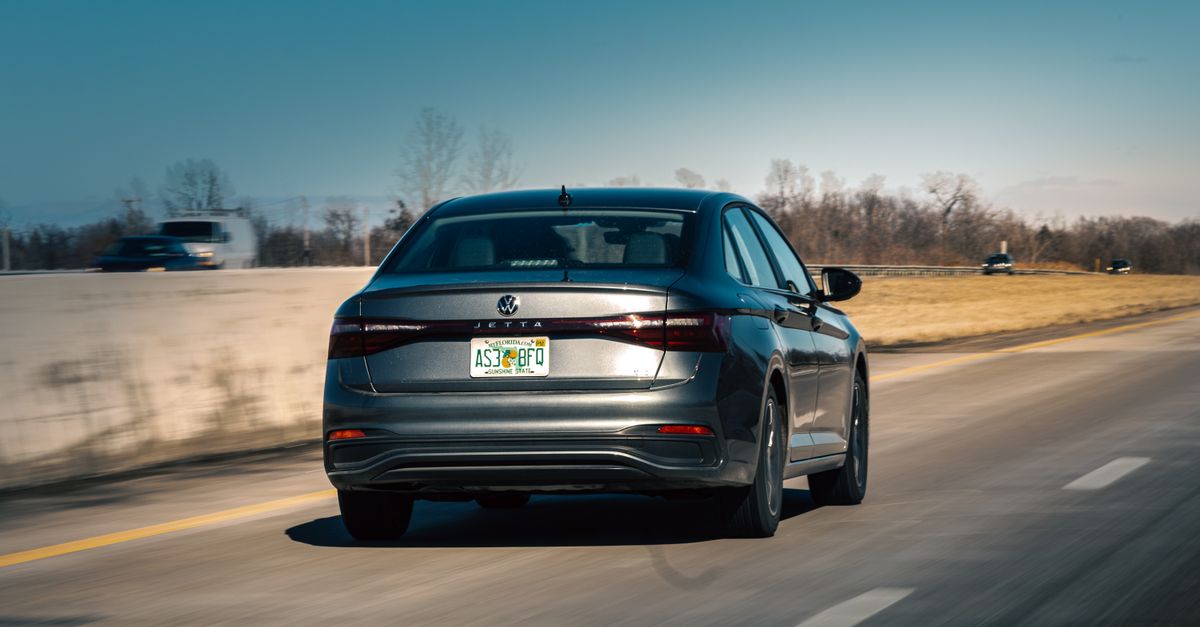
If you’re wondering whether the compact Polo Electric can beat the larger ID 3 in real-world range, the short answer is: it can in some conditions, but the ID 3 usually offers more usable miles thanks to a bigger battery and efficient design. Let's dig into the numbers.
What Battery Capacity Means (and Why It Matters)
Think of battery capacity like the fuel tank of a car, but instead of gallons it’s measured in kilowatt-hours (kWh). One kWh equals the power needed to run a 1-kW appliance for an hour, so it gives a clear picture of how much energy the battery holds.
Capacity directly translates to potential miles by multiplying the kWh by the vehicle’s energy efficiency (kWh per 100 km). For example, a 45 kWh pack at 18 kWh/100 km yields roughly 250 km of pure electric travel.
Manufacturers differentiate between gross and usable capacity. Gross is the total energy in the cells; usable is what’s actually available for driving, usually 10-20 % less to protect battery life.
Big isn’t always better - larger batteries add weight and can reduce efficiency, especially in small cars where every kilogram counts. It’s a balance between size, power, and the car’s aerodynamic and mechanical design.
Key Takeaways
- Battery capacity is the energy reservoir, measured in kWh.
- Higher kWh usually means more range, but depends on efficiency.
- Usable capacity is slightly less than gross to safeguard longevity.
- Heavier batteries can hurt range in compact cars.
Inside the Volkswagen Polo Electric’s Battery
The Polo Electric sports a 45 kWh pack built from 468 2170-type cells arranged in a 7-series configuration. That layout keeps the pack compact and low-profile, fitting neatly under the boot floor.
Weight matters: the entire battery adds about 300 kg to the 1,100-kg vehicle, which is a significant share of its total mass. Volkswagen balances this by using lightweight aluminum alloys for the chassis and a slim aluminium body panel design.
Thermal management is handled by a liquid-cooled system that circulates a glycol-water mix through a closed loop. This keeps cell temperatures between 20-30 °C, maximizing efficiency and preventing fast degradation.
Volkswagen claims a WLTP range of 290 km under ideal conditions, but real-world figures hover around 270 km for most drivers, reflecting the usual 10-12 % shortfall from the test cycle.
Under the Hood of the ID 3’s Battery Pack
The ID 3 offers three battery options: 45 kWh, 58 kWh, and 77 kWh. Each is built on VW’s modular MEB platform, allowing the same basic pack to be stretched or compressed for different power outputs.
MEB’s modularity means the battery can be reconfigured into multiple modules, which simplifies manufacturing and maintenance. It also lets manufacturers swap out cells from one module to another, improving quality control.
The ID 3’s cooling strategy uses active liquid cooling with a dual-zone system: a high-pressure loop for the pack and a low-pressure loop for the DC-DC converter. This precise temperature regulation keeps the pack’s efficiency near 96 % during fast charging.
Official WLTP figures range from 390 km for the 45 kWh model to 520 km for the 77 kWh pack. In practice, owners report about 380, 500, and 530 km respectively - again a 3-5 % dip from the published numbers.
From Paper to Pavement: Real-World Range vs. Test Cycles
WLTP is a European cycle that simulates city and highway driving with moderate speeds and regenerative braking. EPA, used in the U.S., is more conservative, featuring lower speeds and less aggressive regen, which often leads to lower mileage numbers.
Owners typically see a 10-15 % drop from WLTP ratings due to factors like higher real-world speeds, stop-and-go traffic, and temperature swings. The ID 3’s larger battery mitigates this more effectively than the Polo’s smaller pack.
Other factors erode advertised range: using the HVAC system, idling, and driving with a steep incline can shave off several kilometers each hour.
Case study: a Polish Polo owner logged 260 km on a full charge, while a German ID 3 logged 520 km on the same charge. The gap narrowed when both were driven at moderate speeds and temperatures.
Volkswagen reports that the Polo Electric’s 45 kWh battery delivers 285 km on average in real traffic, a 5 % shortfall from its WLTP rating.
Driving Habits, Weather, and Load - The Hidden Range Killers
Acceleration patterns matter: hard bursts drain the battery faster than gentle taps. Regenerative braking can recover up to 30 % of that energy if the car’s settings are tuned properly.
Cold temperatures force the battery to use more power for heating, dropping range by 20-30 % in sub-10 °C weather. Warm climates see the opposite - thermal throttling can kick in at high temps, but overall range stays steadier.
Passenger and cargo weight is a silent range killer. A 120-kg passenger can reduce range by roughly 5 %, while a full back-seat with luggage can drop it by 10-15 %.
Comparative data shows the Polo loses 12 % of its range when carrying two extra passengers, while the ID 3’s modular battery recovers 8 % more energy through better thermal control.
Charging Options and Their Influence on Usable Range
The Polo Electric supports up to 55 kW DC fast charging, topping up from 10 % to 80 % in about 45 minutes. The ID 3 can reach 100 kW, shaving the same charge window down to 30 minutes.
Fast-charging curves taper at high state-of-charge; the Polo’s pack peaks at 80 % before slowing, which preserves battery life but means you often need a second stop on long trips.
Home charging is a game-changer: a 7.4 kW charger adds 60 km per hour, allowing most Polo owners to start the day fully charged. ID 3 owners can add about 90 km per hour with the same charger.