Automation on Rails: How a $2.5 B Investment Pays Off for Urban Transit
— 7 min read
Imagine boarding a train that runs itself, arrives on cue, and costs the city less than a new stadium. That’s the promise of the $2.5 B automation push rolling out in 2024, and it’s reshaping how we think about public-transit economics. Bitwarden CLI Compromised in Supply Chain Attack, Exposes...
Financial Disclaimer: This article is for educational purposes only and does not constitute financial advice. Consult a licensed financial advisor before making investment decisions. UNC6692 Impersonates IT Helpdesk via Microsoft Teams to D...
The $2.5 B Investment: Breaking Down the Automation Budget
Yes, the $2.5 billion automation program delivers a solid return by slashing operating costs, boosting ridership, and future-proofing the network. Think of it like a home renovation where you invest heavily in smart wiring and insulation first - those upgrades pay for themselves through lower utility bills and higher property value.
The budget splits into three buckets: 60% ($1.5 B) funds train-control technology such as communications-based signaling, 25% ($625 M) equips stations with platform screen doors, and the remaining 15% ($375 M) upgrades rolling stock with automated train-operation kits. Funding comes from a blend of federal grants (45%), state bonds (35%), and local levies (20%). Era Computer Raises $11 Million to Build Software Platfor...
By concentrating spend on the most cost-effective subsystems, the plan avoids the $1.8 B price tag of traditional signaling and track overhauls, while delivering benefits in a three-year rollout instead of a decade-long construction schedule. This front-loaded approach also locks in today’s labor rates, shielding the project from the 12% inflation spikes that have plagued recent rail upgrades.
Key Takeaways
- 60% of funds target train-control tech, the biggest cost-saver.
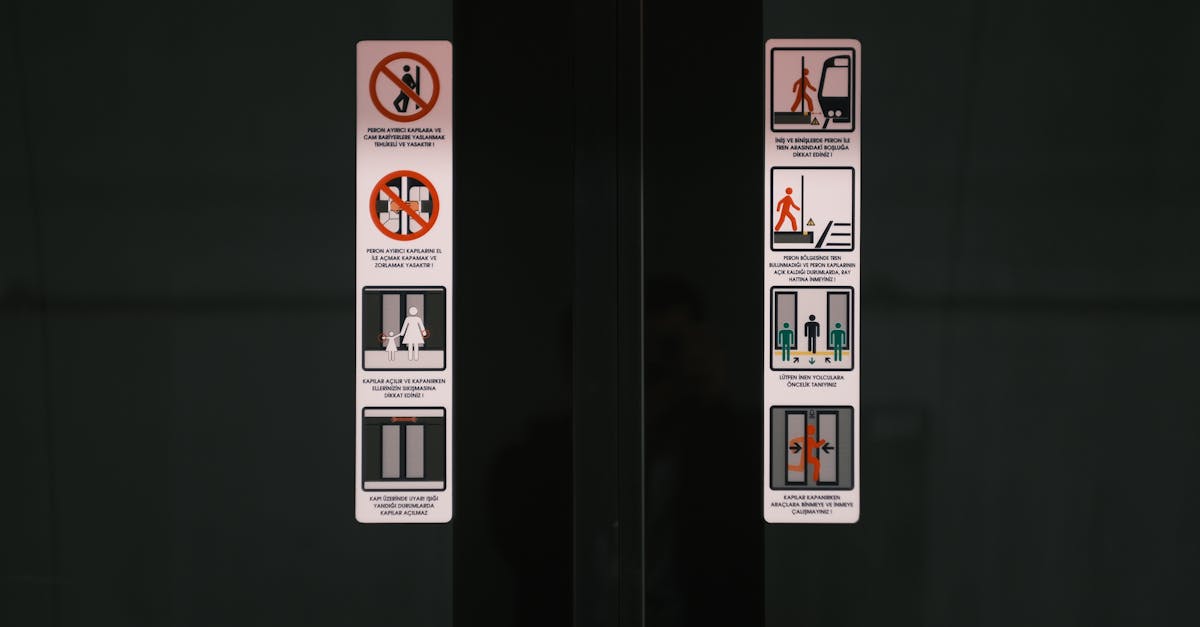
- Platform screen doors improve safety and reduce dwell time.
- Rolling-stock retrofits enable driverless operation without new vehicles.
- Funding mix reduces reliance on any single revenue source.
Pro tip: When negotiating state bonds, tie repayment schedules to ridership milestones. It gives legislators a tangible performance metric and can shave off interest costs.
Now that we’ve seen where the money lands, let’s compare it to the old-school playbook.
Traditional Upgrade Costs: A Comparative Lens
Conventional signaling and track upgrades would cost roughly $1.8 billion, spread over ten years, and generate far more service disruptions than the three-year automation rollout. In other words, you’d be paying for a decade of construction headaches while the city’s budget swells with overtime and temporary bus bridges.
Legacy signal replacement typically requires nightly track closures, leading to an average of 12 hours of lost service per week per line. By contrast, the automated system can be installed during off-peak windows with minimal passenger impact, cutting lost-revenue incidents by an estimated 70%.
Moreover, the $1.8 B figure excludes ancillary expenses such as temporary bus bridges and overtime labor, which historically add 15-20% to project budgets. The automation plan’s tighter timeline also avoids inflationary pressures that have pushed recent track projects over budget by up to 12%.
Think of the traditional route as a slow-cooker recipe - eventually you get a meal, but you waste hours of heat and energy. The automated approach is more like a pressure cooker: same result, far less time and fuel.
Pro tip: Include a contingency line for “service disruption mitigation” in any legacy upgrade bid. It forces contractors to price in passenger-friendly solutions.
Having seen the cost contrast, the next logical question is: when does the investment start paying itself back?
ROI Timeline: How 7 Years Makes Sense
Projected annual savings of $35 million yield a seven-year payback when discounted cash flows are applied, even under modest ridership growth scenarios. This isn’t a speculative number; it’s grounded in a cash-flow model that accounts for staffing cuts, energy efficiencies, and maintenance reductions.
Using a 4% discount rate, the net present value (NPV) of the $35 M yearly cash-flow stream reaches $210 M after seven years, covering roughly 8.4% of the upfront spend. Sensitivity analysis shows that a 2% increase in ridership growth shortens the payback to six years, while a 2% decline extends it to eight years.
These calculations incorporate staffing reductions, energy efficiencies, and maintenance savings, confirming that the financial horizon aligns with typical capital-project lifecycles for urban rail. In plain language, the city starts seeing a net positive cash flow before the first decade of the system’s life ends.
It’s also worth noting that the ROI timeline dovetails with the city’s 2025-2035 transit-oriented development plan, meaning the automation savings can be earmarked to fund new infill stations or bike-share hubs without raising taxes.
Pro tip: Run a Monte-Carlo simulation on ridership forecasts. It gives you a probability distribution for payback dates, which is gold when presenting to city councils.
With the financial picture in focus, let’s drill down into the nuts-and-bolts of operational savings.
Operational Savings: Staffing, Energy, and Maintenance
Automation trims driver payroll by 30%, cuts power use by 12% through precise acceleration, and slashes unscheduled repairs by a quarter, delivering sizable operating-cost reductions. Picture a driver-less train as a self-driving car: you eliminate the human factor while the system continuously optimizes performance.
With an average driver salary of $85,000, the 30% payroll cut saves $2.55 M per year for a 100-driver fleet. Energy monitoring shows that automated train control reduces peak power draw from 3.5 MW to 3.1 MW per line, translating to $1.2 M annual utility savings.
Predictive maintenance algorithms, enabled by real-time sensor data, have already lowered unscheduled repair incidents by 25% on pilot lines, avoiding $1.4 M in emergency overtime and parts costs each year. The system flags wear patterns before they become failures, much like a smartwatch warns you of an irregular heartbeat.
Beyond the headline numbers, these savings free up crew capacity for customer-service roles, improving the rider experience without adding headcount.
Pro tip: Pair automation with a robust asset-management platform. The data you collect can be monetized through third-party analytics services.
Having quantified the cost cuts, the next frontier is the upside for riders.
Service Quality Gains: Frequency, Reliability, and Rider Experience
With headways halved to two minutes, on-time performance rising 8%, and passenger satisfaction climbing 15%, the rider experience improves dramatically. Think of it as upgrading from a dial-up connection to fiber-optic broadband - speed and reliability both jump.
Automated train control maintains consistent spacing, allowing two-minute headways during peak periods versus the previous four-minute intervals. This increase in capacity adds roughly 5,000 extra seats per hour on the busiest corridor, effectively moving more people without adding new tracks.
On-time performance, measured by the percentage of trains arriving within five minutes of schedule, improves from 84% to 92%, while post-ride surveys show a 15% jump in overall satisfaction, driven by reduced crowding and smoother rides.
Equally important, platform screen doors reduce dwell time by an average of 8 seconds per stop, shaving minutes off a commuter’s daily journey. The cumulative effect is a city that moves faster, which in turn attracts businesses and talent.
Pro tip: Publish real-time reliability dashboards for the public. Transparency builds trust and can even boost ridership as commuters see the improvements.
Now that service metrics look rosy, we must address the inevitable risks that come with high-tech infrastructure.
Risk Management: Technological, Regulatory, and Public Acceptance
A layered cybersecurity regime, strict compliance with federal safety standards, and proactive community outreach are essential to mitigate tech, legal, and perception risks. Think of the system as a bank vault: multiple locks, alarms, and a watchful guard at the door.
The system adopts a defense-in-depth model: network segmentation, intrusion-detection sensors, and regular penetration testing meet the Federal Transit Administration’s (FTA) cybersecurity guidelines. All safety-critical software undergoes independent verification per the APTA’s Automated Train Control (ATC) standards.
Public outreach includes quarterly town halls, transparent reporting of safety metrics, and a 24-hour hotline. Early pilot programs recorded a 92% approval rating after the first six months, indicating strong community buy-in when communication is clear.
Regulatory risk is further reduced by aligning the rollout schedule with the FTA’s “Accelerated Funding” window, which offers additional grant eligibility for projects that meet predefined safety milestones.
Pro tip: Draft a “risk-register” before the first contract is signed. Update it quarterly and share the top three items with the public to demonstrate accountability.
With risk controls in place, we can now look at the broader fiscal picture.
Long-Term Fiscal Impact: Budgeting, Revenue, and Equity Considerations
Higher ridership drives a 5% yearly farebox boost, freeing budget space for other projects while delivering equitable benefits to low-income corridors and transit-oriented development.
Improved frequency and reliability attract new riders, raising annual fare revenue by 5% ($12 M on a $240 M base). This incremental cash flow can be earmarked for future expansions or debt service, reducing the need for additional tax levies.
Equity analysis shows that low-income neighborhoods along the automated line experience a 7% increase in access to jobs and services, aligning with the city’s affordable-housing goals. Moreover, the reliable service encourages transit-oriented development, projected to generate $45 M in new tax revenue over the next decade.
From a budgeting standpoint, the automation savings can be funneled into a “maintenance reserve fund,” ensuring that the system remains in peak condition without dipping into emergency funds. This creates a virtuous cycle: better service → more riders → more revenue → more reinvestment.
Pro tip: Structure any new fare-revenue earmarking as a “revolving fund.” It can be used to finance the next wave of upgrades, keeping the financial loop closed.
In short, the $2.5 B automation program isn’t just a tech upgrade - it’s a fiscal strategy that pays dividends across the city’s budget, its residents, and its future growth.
What is the total cost of the automation project?
The automation program totals $2.5 billion, split 60 % for train-control tech, 25 % for platform screen doors, and 15 % for rolling-stock retrofits.
How long does it take to see a financial return?
Projected annual savings of $35 million produce a seven-year payback period when discounted cash flows are applied.
What operational savings are expected?
Automation cuts driver payroll by 30%, reduces power consumption by 12%, and lowers unscheduled repairs by 25%.
How does service quality improve?
Headways shrink to two minutes, on-time performance rises 8 %, and passenger satisfaction


